
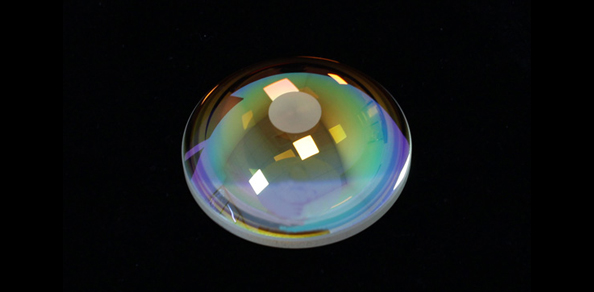
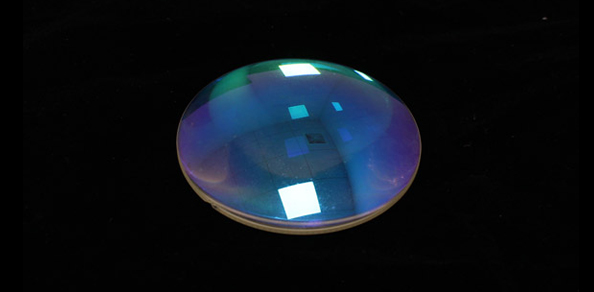
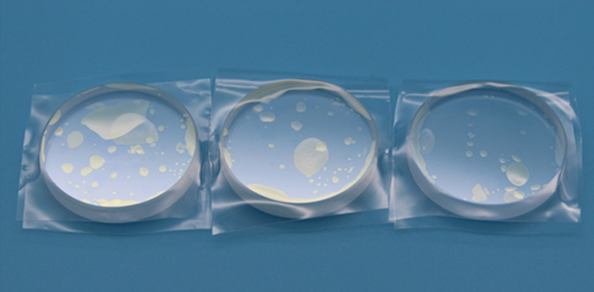
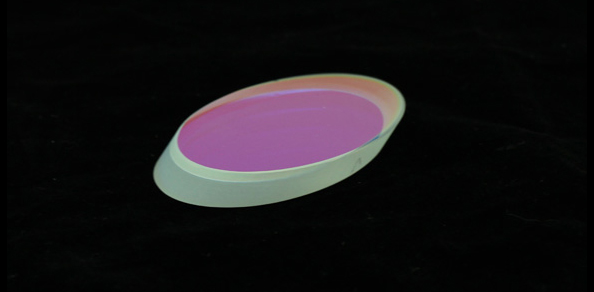
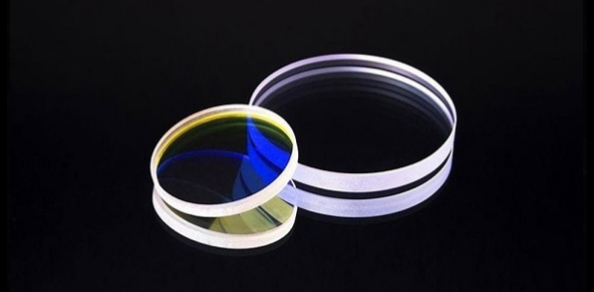
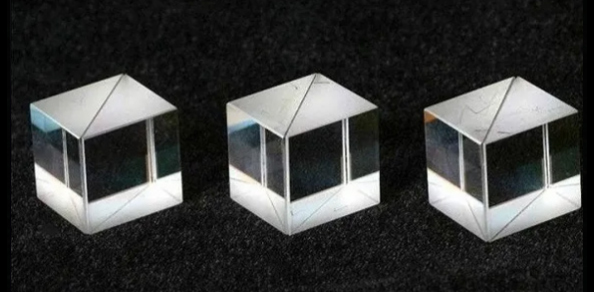



The difference between optical glass lenses and other glass lenses is that as a component of an optical system, also known as an optical lens, it must meet requirements such as optical imaging.Its cold processing technology uses chemical vapor heat treatment and single piece sodium-calcium silicate glass to change its original molecular structure without affecting the original color and transmittance of the glass, making it reach the superhard standard,monolithic soda-lime-silica glass fire-resistant glass and its manufacturing method and specialized equipment that meet fire protection requirements under high-temperature flame impact.It is made of the following components in a weight ratio: potassium salt vapor (72%~83%), argon gas (7%~10%), gaseous copper chloride (8%~12%), and nitrogen gas (2%~6%).
It includes the following process flow: cutting with soda-lime-silica glass as the substrate, and cold processing with precision edge grinding→Chemical vapor phase heat treatment of sodium calcium silicate glass after cold processing→Coating the surface of sodium-calcium silicate glass with fire-resistant protective film→Perform special physical tempering treatment on the surface of sodium calcium silicate glass.A specialized thermal decomposition gasification equipment is composed of a cylinder body and its cylinder head, as well as a reaction kettle connected to the cylinder head.
There are the following requirements for the quality of optical glass lenses:
1、Specific optical constants and consistency of optical constants among glass from the same batch
Each variety of optical glass has a specified standard refractive index value for light of different wavelengths, which serves as the basis for optical designers to design optical systems.So the optical constants of the optical glass mass-produced must be fall within the permissible deviation range of these values, otherwise it will cause the actual imaging quality to deviate from the expected results during design and compromise the overall performance the optical instrument.At the same time, due to the fact that instruments of the same batch are often made of the same batch of optical glass, in order to facilitate unified calibration of the instruments, the allowable deviation of the refractive index of the same batch of glass should be more stringent than their deviation from the standard value.
2、Highly transparent
The brightness of optical system imaging is proportional to the transparency of glass, and the light transmittance of optical glass to a specific wavelength of light is characterized by the light absorption coefficient K λ.After passing through a series of prisms and lenses, some of the energy of light is lost at the interface reflection of optical components, while the other part is absorbed by the
glass medium itself.
The former increases with the increase of glass refractive index, and this value is very large for high refractive index glasses, such as heavy flint glass, where the surface light reflection loss is about 6%.Therefore, for optical systems containing multiple thin lenses, the main way to improve transmittance is to reduce the reflection loss on the lens surface, such as applying anti-reflective coating.
For large-aperture optical elements such as astronomical telescope objectives, material thickness is substantial, the transmittance of the optical system is mainly determined by the light absorption coefficient of the glass itself.By improving the purity of glass raw materials and preventing any coloring impurities from entering the entire process from batching to melting, the light absorption coefficient of glass can generally be reduced to below 0.01.
Knowing the process, how can we improve the yield of optical lenses?
Cutting, CNC machining, profile copying, and precision carving seem to have only a few simple processes,However, the industry's yield rate is only 50%~70%, and the problem of loss in precision processing of optical glass has always been criticized!
Why does this occur? The answer given by professionals is that optical glass has the characteristics of high hardness and brittleness, and its surface is prone to brittle fracture and cracking during processing.
How to address this issue?Our proposed solution is to develop CNC water-based film stripping protective ink to solve this problem from the source.