



(1) The first generation anti-wear coating technology
Anti wear coating began in the early 1970s, when it was believed that glass lenses were difficult to grind due to their high hardness, while organic lenses were too soft and prone to wear. Therefore, quartz was deposited on the surface of organic lenses under vacuum to form a very hard anti-wear coating. However, due to the mismatch between its thermal expansion coefficient and the substrate material, the film was easy to peel off and the film layer is brittle, resulting in an unsatisfactory anti-wear effect.
(2) Second generation anti-wear coating technology
After the 1980s, researchers theoretically discovered that the wear mechanism is related not only to hardness, but also to the dual characteristics of "hardness/deformation" in coating materials. Some materials have higher hardness but smaller deformation in focusing lens materials, while others have lower hardness but larger deformation. The second generation of wear-resistant film technology coats the surface of organic lenses with a high hardness and non brittle material through an immersion process.
(3) Third generation anti-wear coating technology
The third-generation anti-wear coating technology was developed after the 1990s, mainly to solve the wear resistance problem of organic lenses coated with anti reflective coating layers. Due to the significant difference in hardness between the organic lens substrate and the anti reflective coating layer, a new theory suggests the need for an anti-wear coating layer between the two to provide cushioning when the lens is subjected to abrasive wear and reduce the risk of scratches. The hardness of the third-generation wear-resistant coating layer material is between that of the anti reflective coating and the aspherical lens mirror lens substrate, with a low coefficient of friction and low susceptibility to brittle cracking.
(4) The fourth generation anti-wear coating technology
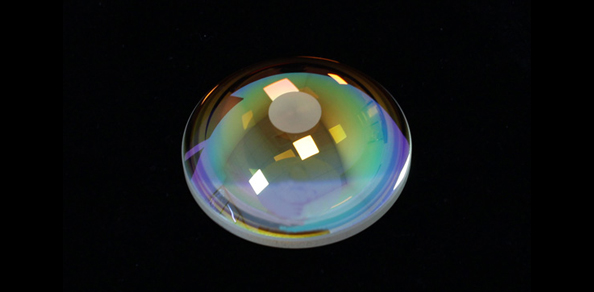
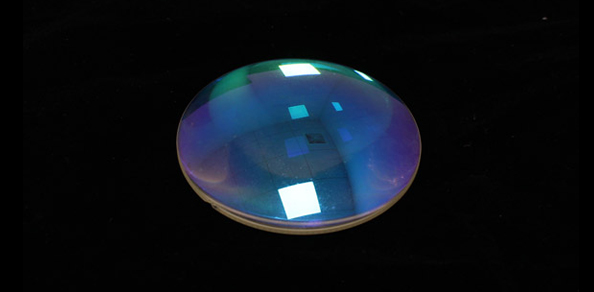
The fourth generation of anti-wear coating technology uses silicon atoms, such as the TITUS hardening solution from the French company Essilor, which contains both organic matrix and inorganic ultrafine particles including silicon elements, making the anti-wear coating tough and increasing its hardness. A key modern wear-resistant coating technology is the immersion method, which involves immersing the lens in a hardening solution after multiple cleaning steps, and then lifting it up at a certain speed after a certain period of time. This speed is related to the viscosity of the hardening fluid and plays a decisive role in the thickness of the anti-wear coating layer. After lifting, polymerize in an oven at around 100 ° C for 4-5 hours, with a final coating thickness of approximately 3-5 microns.